On 17 April 2025, the United States Trade Representative (USTR) announced new measures under Section 301 that will significantly affect the global shipping industry. These tariffs are set to take effect from 14 October 2025 and would introduce service fees on vessels associated with China—including those owned, operated, or built in the People’s Republic of China, Hong Kong, or Macau—that call at U.S. ports.
While the regulation is broad in scope, its implications are particularly relevant for shipping companies chartering vessels from Hong Kong entities or operating Chinese-built ships. The fees will increase annually, with rates reaching up to US$140 per net ton for Chinese vessel operators and up to US$250 per container for non-Chinese operators using Chinese-built vessels by 2028. Vehicle carriers built outside the US will also be subject to fees of US$150 per Car Equivalent Unit (CEU) starting this October.
USTR301 Fee Schedule Overview
Table 1 – Chinese Vessel Operators and Owners
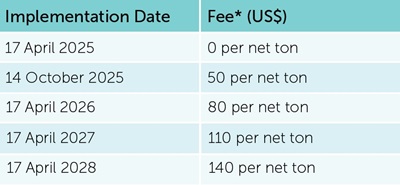
* Fees will be charged up to 5 times per year per vessel.
Table 2 – Non-Chinese Operators of Chinese-Built Vessels^
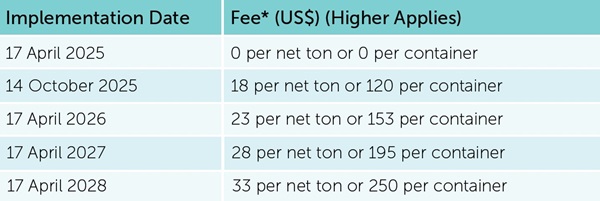
* Fees will be charged up to 5 times per year per vessel.
^ Certain exemptions apply
Table 3 – Foreign-Built Vehicle Carriers

How Can CLA Global TS Help?
This development presents both challenges and opportunities. For affected companies, now is a prudent time to review vessel ownership structures and consider strategic adjustments. Options such as transferring vessels to Singapore entities or reflagging ships under Singapore registration may help mitigate tariff exposure and help shipping companies to align with long-term operational goals.
At CLA Global TS, we are actively supporting clients in evaluating their positions and exploring restructuring strategies. Our team is equipped to provide guidance on ownership transitions, tax implications, and regulatory compliance, ensuring that clients can respond confidently and effectively amid a challenging and volatile landscape.
We encourage shipping and logistics stakeholders to engage with us early. We are here to help you navigate this transition with clarity and confidence. By taking proactive steps now, companies can better manage the impact of these changes and position themselves for continued success in a shifting regulatory environment.
If you would like to discuss how this regulation may affect your operations, or explore tailored solutions for your business, please reach out to us.
View the full article in PDF here.
CONTACT US
Contact our Tax Advisory Specialists for a Discussion
 |
Edwin Leow Co-Advisory Leader Head of Tax edwinleow@sg.cla-ts.com |
 |
John Chua Associate Director, Tax johnchua@sg.cla-ts.com |